PCL Rehabilitation Exercises: A Comprehensive Guide
This guide, based on a Mass General protocol, outlines post-operative PCL reconstruction rehabilitation. It’s time-based and criterion-based,
requiring clinical judgment and adapting to individual patient needs and surgeon preferences.
Interventions aren’t exhaustive; clinicians should modify based on progress. Contact the physician for fever, numbness, drainage, or uncontrolled pain.
Patient education is key for successful recovery and long-term knee health.
Understanding the Posterior Cruciate Ligament (PCL)
The Posterior Cruciate Ligament (PCL) is a critical stabilizer within the knee joint, often overshadowed by its more frequently injured counterpart, the ACL. Located deep inside the knee, the PCL connects the femur (thighbone) to the tibia (shinbone), preventing excessive posterior translation – or backward movement – of the tibia relative to the femur.
Unlike the ACL, PCL injuries are less common, typically resulting from high-energy trauma like direct blows to the front of the tibia, such as during a car accident or a fall onto a bent knee. However, understanding its anatomy and biomechanical role is fundamental to effective rehabilitation. The PCL’s primary function is to control tibial sag and rotational stability, particularly when the knee is flexed.
A compromised PCL can lead to instability, causing a sensation of the knee “giving way” and impacting daily activities. Successful rehabilitation hinges on restoring this stability and function, guided by a comprehensive understanding of the ligament’s role within the complex knee joint mechanism.
PCL Injury Mechanisms & Common Causes
PCL injuries differ significantly from ACL tears in their typical mechanisms. Direct trauma is the predominant cause, accounting for the majority of PCL injuries. This often involves a blow to the anterior tibia with the knee flexed, forcing the tibia posteriorly. Common scenarios include dashboard injuries in car accidents, where the bent knee impacts the dashboard, or direct impacts during contact sports like football or rugby.
Hyperextension injuries, though less frequent, can also damage the PCL. These occur when the knee is forced beyond its normal range of motion. Unlike ACL injuries, non-contact twisting mechanisms are rarely the sole cause of PCL tears.
Isolated PCL injuries are relatively uncommon; they often occur in conjunction with other ligamentous damage, complicating both diagnosis and rehabilitation. Recognizing the specific injury mechanism is crucial for tailoring a targeted rehabilitation program and anticipating potential challenges.
Goals of PCL Rehabilitation
The primary goals of PCL rehabilitation are multifaceted, aiming to restore full, pain-free knee function and prevent re-injury. Initially, the focus is on protecting the reconstructed ligament – or healing the native tissue – by controlling swelling and pain. Restoring complete patellar mobility is also paramount, preventing stiffness and optimizing biomechanics.
Achieving full knee extension is a critical early goal, followed by a gradual and controlled progression of flexion. Simultaneously, rehabilitation addresses arthrogenic muscle inhibition, specifically targeting quadriceps strength, which often diminishes after injury or surgery.
Later phases emphasize regaining hamstring strength, enhancing proprioception (joint position sense), and improving overall neuromuscular control. Ultimately, the goal is a return to pre-injury activity levels, including sport-specific movements, with a minimized risk of future complications.
Phase 1: Immediate Post-Op (0-4 Weeks)
Initial priorities include graft protection, swelling and pain reduction, and restoring patellar mobility; Focus on full extension, gradual flexion, and minimizing muscle inhibition.
Protecting the Graft – Initial Priorities
Graft protection is paramount during the immediate post-operative phase (0-4 weeks). This involves diligently adhering to weight-bearing restrictions as dictated by the surgeon, typically utilizing crutches and limiting weight to toe-touch or partial weight-bearing initially.
Crucially, patients must avoid pivoting or twisting motions on the surgical leg. Maintaining the knee in a fully extended position, especially when seated or lying down, provides stability and minimizes stress on the newly reconstructed PCL. Support the entire leg when extended to prevent accidental bending.
Consistent elevation of the leg above the heart helps to control swelling and promote optimal healing. A brace may be prescribed to further immobilize and protect the knee joint, limiting range of motion to prevent excessive strain on the graft. Strict adherence to these precautions is vital for successful graft incorporation and long-term stability.
Swelling and Pain Management Techniques
Effective swelling and pain control are fundamental in the initial post-operative period (0-4 weeks). RICE – Rest, Ice, Compression, and Elevation – remains the cornerstone of management. Apply ice packs for 15-20 minutes several times daily to reduce inflammation and alleviate discomfort.
Compression bandages help minimize edema and provide support. Elevation of the leg above the heart is crucial for promoting fluid drainage and reducing swelling. Pain medication, as prescribed by the physician, should be taken as directed to manage pain levels effectively.
Gentle range of motion exercises, within the protected range, can also aid in reducing stiffness and promoting circulation. Monitor for signs of excessive pain or swelling, and adjust activity levels accordingly. Proactive pain and swelling management facilitates earlier participation in rehabilitation exercises and optimizes recovery outcomes.
Restoring Patellar Mobility Exercises
Early restoration of patellar (kneecap) mobility is a critical component of PCL reconstruction rehabilitation. Limited patellar movement can hinder knee extension and contribute to arthrofibrosis – scar tissue formation restricting joint motion.
Gentle patellar mobilization exercises should begin immediately post-operatively, as tolerated. These involve applying gentle pressure to the patella in superior, inferior, medial, and lateral directions to restore normal gliding mechanics.
Perform these mobilizations slowly and rhythmically, avoiding any forceful movements that cause pain. Active quadriceps sets can also assist in improving patellar tracking. Consistent performance of these exercises, several times a day, is essential for preventing patellar stiffness and optimizing knee function. Monitor for any increased pain or resistance during mobilization.
Range of Motion: Achieving Full Extension & Gradual Flexion
Restoring a full range of motion (ROM) is paramount following PCL reconstruction. Initial focus centers on achieving full knee extension – straightening the leg completely – as this is often compromised post-surgery. Heel props and gravity-assisted exercises are utilized to encourage extension.
Simultaneously, gradual flexion – bending the knee – is initiated. Avoid aggressive stretching early on, prioritizing pain-free movement. Controlled knee bends, utilizing a towel or slide board, can aid in flexion gains.
The goal is progressive improvement in both extension and flexion, guided by patient tolerance and avoiding overstressing the graft. Consistent, gentle ROM exercises, performed multiple times daily, are crucial. Monitor for swelling or pain increases, adjusting the intensity accordingly.
Quadriceps Activation & Arthrogenic Muscle Inhibition
Post-PCL reconstruction, arthrogenic muscle inhibition – a reduction in muscle activation due to pain and swelling – commonly affects the quadriceps. Re-establishing quadriceps control is vital for knee stability and function.
Early exercises focus on regaining voluntary quadriceps activation without relying on gross movements. Isometric quadriceps sets (tightening the thigh muscle without moving the knee), quad sets with a towel under the knee, and biofeedback techniques are employed.
Progress to gentle straight leg raises (SLRs), ensuring proper form to avoid hamstring compensation. Address any quad weakness promptly, as it can hinder rehabilitation progress.
The aim is to minimize inhibition and restore full quadriceps strength, contributing to improved knee control and functional outcomes. Consistent effort and appropriate progression are key.
Phase 2: Early Strengthening (Weeks 4-8)
This phase emphasizes closed kinetic chain exercises, hamstring strengthening, and proprioceptive training. Low-impact cardiovascular conditioning is also introduced to improve overall fitness.
Closed Kinetic Chain Exercises for PCL Rehab

Closed kinetic chain (CKC) exercises are fundamental during weeks 4-8 post-PCL reconstruction, prioritizing stability and functional movement patterns. These exercises involve the foot being fixed on a surface, allowing for muscle activation without excessive stress on the healing ligament.
Examples include mini-squats (0-45 degrees), leg presses, and step-ups. Initially, focus on maintaining full knee extension and avoiding posterior tibial translation. Progress gradually increase range of motion and resistance as tolerated.
Wall slides are excellent for controlled flexion, while hamstring curls on a stable surface enhance posterior chain strength. Emphasis should be placed on proper form and avoiding pain. CKC exercises promote co-contraction of muscles around the knee, improving dynamic stability and preparing the joint for more advanced activities.
Monitor for any signs of graft irritation or increased swelling, adjusting the program accordingly. These exercises are crucial for restoring functional strength and preparing the patient for the next phase of rehabilitation.
Hamstring Strengthening Exercises – Importance & Progression
Hamstring strengthening is vital during weeks 4-8 post-PCL reconstruction, counteracting quadriceps dominance and restoring knee stability. Weak hamstrings can contribute to posterior tibial translation, hindering recovery.
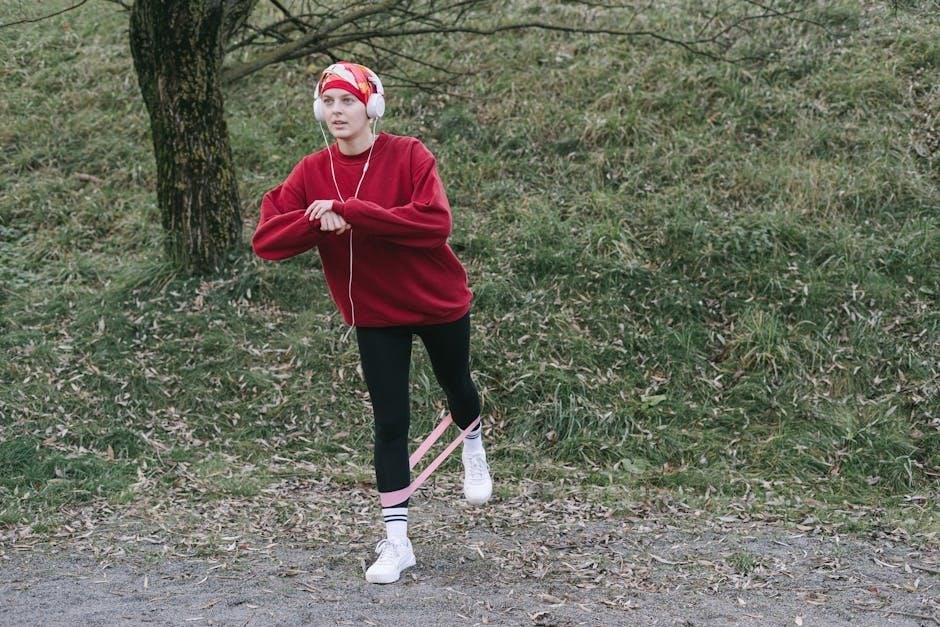
Initial exercises include prone hamstring curls with light resistance, focusing on controlled movement and avoiding pain. Progress to standing hamstring curls using resistance bands, gradually increasing resistance as strength improves. Nordic hamstring curls, performed with a partner, are advanced and should be introduced cautiously.
Bridge exercises with hamstring activation further engage the posterior chain. Emphasis should be on maintaining a neutral spine and avoiding hip flexion during curls. Monitor for any signs of graft irritation or increased swelling, adjusting the program accordingly.
Proper progression is key to prevent re-injury and optimize functional outcomes. Strong hamstrings are essential for dynamic knee control and a successful return to activity.
Proprioceptive Training – Enhancing Joint Stability
Proprioception, or joint position sense, is crucial for PCL rehabilitation, particularly during weeks 4-8. PCL injury often disrupts this sense, increasing the risk of instability and re-injury. Training aims to restore the knee’s ability to recognize and respond to changes in position.
Begin with weight-shifting exercises, gently shifting weight forward, backward, and side-to-side while maintaining balance. Progress to single-leg stance, initially with eyes open, then closed, challenging the proprioceptive system.
Utilize unstable surfaces like foam pads or wobble boards to further enhance proprioceptive input. BOSU ball exercises, including squats and balance reaches, are also beneficial.
Focus on controlled movements and maintaining proper alignment. Monitor for any signs of instability or pain, adjusting the difficulty as needed. Consistent proprioceptive training is vital for long-term knee stability and functional recovery.
Cardiovascular Conditioning – Low Impact Options
Maintaining cardiovascular health is essential during PCL rehabilitation (weeks 4-8), but high-impact activities are initially contraindicated to protect the healing graft. Focus on low-impact exercises that minimize stress on the knee joint while improving overall fitness.
Stationary cycling is an excellent option, starting with low resistance and gradually increasing duration and intensity. Elliptical training provides a similar cardiovascular workout with reduced joint impact.
Swimming and water aerobics are highly recommended, as the buoyancy of water offloads weight from the knee. Walking on a level surface is also appropriate, gradually increasing distance and pace as tolerated.
Monitor for any pain or swelling, and adjust the intensity accordingly. Avoid activities that cause pivoting or twisting motions. Consistent cardiovascular conditioning supports overall recovery and prepares the patient for more demanding exercises.

Phase 3: Intermediate Strengthening (Weeks 8-12)
Progressive resistance training, balance drills, and functional exercises are key. Assess readiness for advancement based on strength, stability, and pain levels, ensuring safe progression.
Progressive Resistance Training – PCL Specific Exercises
During weeks 8-12, progressive resistance training focuses on strengthening muscles supporting the PCL. Begin with closed kinetic chain exercises, gradually increasing resistance using weights, resistance bands, or body weight. Hamstring curls, leg presses (avoiding deep flexion initially), and controlled squats are beneficial.
Focus on exercises that don’t excessively stress the PCL. Avoid open-chain exercises with significant posterior tibial shear forces early in this phase. Implement exercises targeting the quadriceps, glutes, and calf muscles to provide dynamic stability. Monitor for any increased pain or instability during exercises, adjusting the program accordingly.
Prioritize proper form and controlled movements. Increase weight or resistance incrementally, ensuring the patient maintains good technique. A typical progression might involve starting with 2-3 sets of 10-15 repetitions, gradually increasing to 3-4 sets of 8-12 repetitions as strength improves. Regularly reassess the patient’s progress and adjust the exercise program based on their individual response.
Introducing balance and agility drills between weeks 8-12 is crucial for restoring proprioception and neuromuscular control. Start with static balance exercises on stable surfaces, progressing to unstable surfaces like foam pads or wobble boards. Simple drills include single-leg stance, tandem stance, and reaching activities in multiple directions.
Agility drills should be introduced cautiously, focusing on controlled movements. Begin with linear movements like walking and jogging, gradually progressing to lateral shuffles, carioca, and figure-eight runs. Modify drills based on the patient’s ability to maintain proper form and control. Avoid pivoting or cutting motions initially, as these can place excessive stress on the PCL.
Monitor for any signs of instability or pain during drills. If symptoms arise, regress to a simpler exercise or modify the drill to reduce stress on the knee. Progress the difficulty of drills by increasing speed, adding obstacles, or incorporating more complex movements.
Functional Exercises – Simulating Daily Activities
Functional exercises, initiated during weeks 8-12, bridge the gap between controlled rehabilitation and real-world demands. These activities mimic movements required for daily living, preparing the patient for a return to normal function. Begin with simple tasks like stair climbing, squatting, and lifting light objects, ensuring proper form and minimizing stress on the PCL.
Progress to more complex activities like walking on uneven surfaces, navigating obstacles, and performing simulated work or recreational tasks. Focus on maintaining balance, coordination, and control throughout each exercise. Address any movement patterns that compensate for PCL deficiency.
Modify exercises based on the patient’s specific needs and goals. For example, a patient returning to driving should practice simulated in-and-out movements. Continuously assess the patient’s ability to perform these activities safely and effectively, adjusting the program as needed.
Criteria for Progression to Advanced Phase
Transitioning to Phase 4 (advanced strengthening) requires meeting specific criteria, ensuring adequate tissue healing and functional capacity. Patients must demonstrate minimal pain and swelling, with full or near-full range of motion – achieving 0 degrees of extension and at least 120 degrees of flexion.
Successful completion of intermediate strengthening exercises is crucial. This includes independent performance of closed kinetic chain exercises with moderate resistance, good hamstring strength (at least 60% of the unaffected limb), and satisfactory balance and proprioception.
The patient should exhibit a normalized gait pattern with minimal limping. They must demonstrate the ability to perform functional activities, such as stair climbing and squatting, without significant pain or instability. A thorough clinical examination by the rehabilitation specialist and surgeon is essential before advancing.
Phase 4: Advanced Strengthening & Return to Activity (Weeks 12+)
This phase focuses on building explosive power via plyometrics and sport-specific training. Gradual reintegration and return-to-driving considerations are vital for long-term success.
Plyometric Exercises – Building Explosive Power
Plyometric exercises are introduced cautiously during the advanced phase (weeks 12+) to restore power and prepare the athlete for functional activities. These drills focus on rapid stretching and contracting of muscles, enhancing the knee’s ability to absorb and generate force.
Initial plyometrics should be low-intensity, such as double-leg hops in place, progressing to single-leg hops, lateral hops, and eventually jump landings. Emphasis is placed on proper technique – maintaining alignment, soft landings, and controlled movements.
Progression is guided by the patient’s ability to perform exercises without pain or swelling. The clinician will monitor for any signs of instability or graft stress. Box jumps and depth jumps are introduced later, as tolerance improves.

It’s crucial to integrate plyometrics with other strengthening exercises to ensure a balanced and comprehensive rehabilitation program. The goal is to achieve a return to pre-injury level of function, with a reduced risk of re-injury.
Sport-Specific Training – Gradual Reintegration
Sport-specific training commences when the patient demonstrates adequate strength, agility, and neuromuscular control. This phase focuses on replicating the demands of the athlete’s chosen sport, gradually increasing intensity and complexity.
Activities are tailored to the individual’s sport, incorporating drills that mimic game-like situations. For example, a soccer player might practice cutting, pivoting, and shooting, while a basketball player focuses on jumping, landing, and quick changes of direction.
Progression is carefully monitored, with attention to biomechanics and any signs of discomfort. The clinician will assess the athlete’s ability to perform sport-specific movements without compensatory patterns or instability.
A phased approach is essential, starting with non-contact drills and progressing to controlled contact drills, and finally, full-contact practice. Return to competition is only considered when the athlete has achieved full functional capacity and confidence.
Return to Driving Considerations
Returning to driving post-PCL reconstruction requires careful evaluation of several factors, primarily focusing on the patient’s ability to safely operate a vehicle. This isn’t solely based on a timeframe, but on functional capacity.
Generally, a return to driving is considered around 6-8 weeks post-operatively, as indicated in the Mass General protocol, but this is highly individualized. Crucially, the patient must demonstrate sufficient strength, range of motion, and reaction time to perform emergency maneuvers.
The ability to quickly and forcefully brake, steer, and control the vehicle is paramount. Clinicians will assess these skills through practical tests, potentially including simulated driving scenarios.
Patients should also be pain-free and off any medications that could impair judgment or reaction time. A gradual return to driving is recommended, starting with short trips in familiar areas before progressing to longer distances and more challenging conditions.
Long-Term PCL Health & Prevention of Re-Injury
Maintaining long-term PCL health necessitates a continued commitment to strengthening and proprioceptive exercises even after completing formal rehabilitation. Focus should remain on hamstring and quadriceps strength, as these muscle groups provide crucial dynamic stability to the knee joint.
Proprioceptive training, enhancing joint position sense, is vital for preventing re-injury, particularly during activities involving pivoting or sudden changes in direction. Regular balance exercises and agility drills should be incorporated into a maintenance program.
Adhering to proper biomechanics during athletic activities and daily life is also essential. Avoiding excessive knee hyperextension and limiting high-impact activities can reduce stress on the reconstructed ligament.
Listen to your body and address any pain or instability promptly. A proactive approach to knee health, including regular check-ups with a physical therapist or physician, will help ensure a successful long-term outcome.